
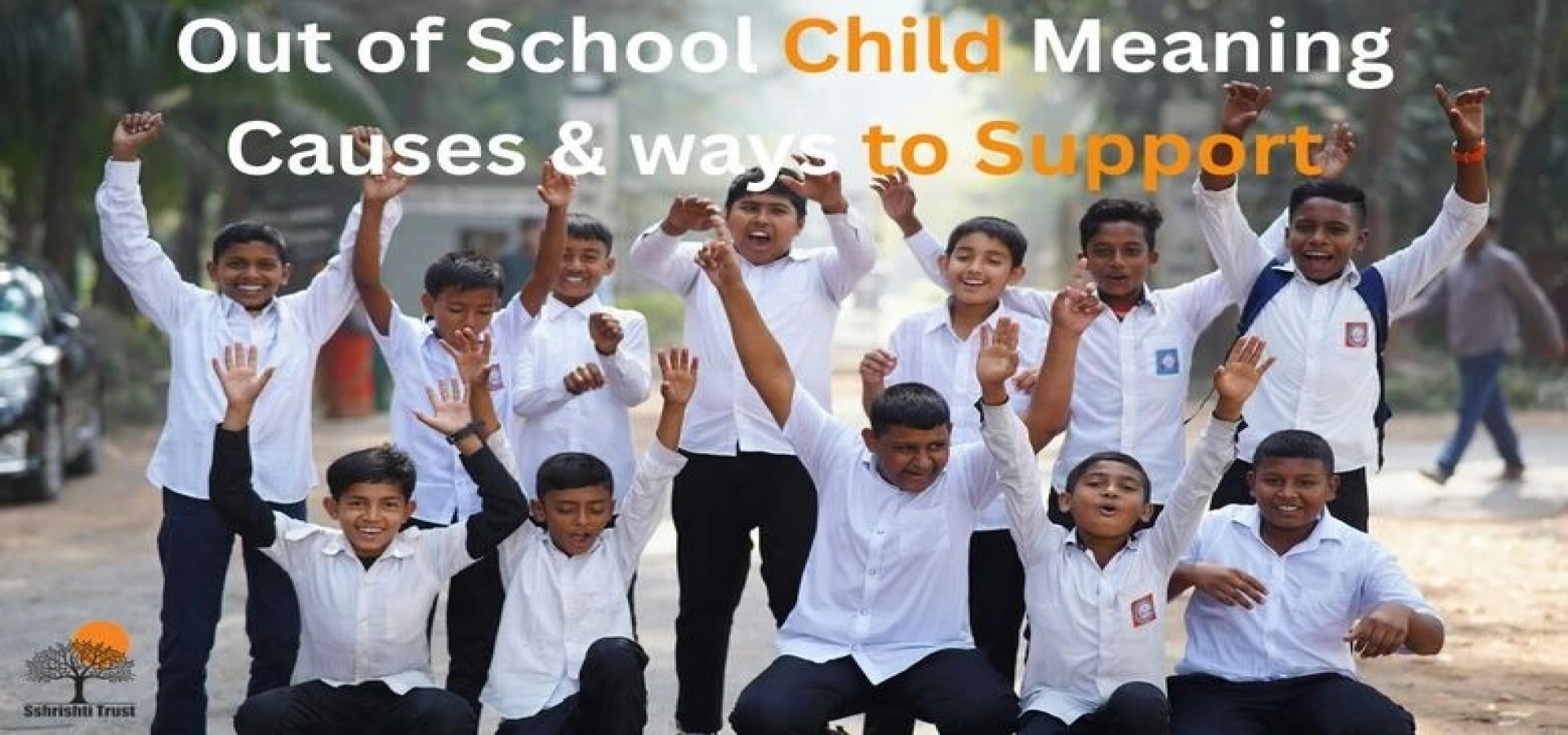
Every child deserves to get education, learn, grow, and build a secure future. But in the presence of various social challenges some children still remain away from school. Out of school meaning they couldn't enroll in school due to financial problems, family responsibilities, lack of study resources and proper guidance.
But what are the causes of this issue? Poverty, child labour, Migration and gender inequality are the key reasons that keep the children out of school. And when a child remains behind and could not get educated, it not only affects the growth of family or community it affects the entire nation’s growth as well. But thanks to NGOs like Sushristi Trust who dedicatedly work hard to provide education to children. They run fundamental and remedial learning programs to support children to understand the basic concepts of academics. They believe that if they can’t go to school, education can still reach them even if they face financial problems or any other social challenge.
The term out of school represents the condition of children who are unable to attend school or unable to enroll in a formal educational institution. These children may have never enrolled in school or may have to leave school midway due to uncertain circumstances.
You can understand this with an example : suppose there is a child who needs to stay at home because the parents are on work to earn money, so it is his responsibility to take care of a younger brother or sister that keeps him skipping school classes. Thus the situation is called out of school.
Several factors stop children from getting an education. Some of the most common reasons are as follows:
Poverty is the main reason that keeps children out of school. A lot of Indian families struggle to manage their daily expenses and the condition becomes difficult for them to pay school fees and other educational expenses like uniforms, transportation etc. In some households, children even need to work to contribute to the family's income.
Some parents remain unaware about the importance of education and keep their children busy with irrelevant things. They only prioritise everyday earning instead of attending school.
Lack of education in generations and old beliefs are the main reason for it.
When there are no parents or parents are in bad habits like drug or alcohol addiction the situation puts families into financial crises and later it contribute to child labour. Many children from poor backgrounds need to work in shops, small businesses and construction sites in order to meet everyday basic necessities and others have to look after their younger siblings. These situations leave less room for attending school classes.
In many remote areas and villages children still face challenges accessing nearby schools. Everyday problems such as long travel distances, transportation expenses, and a lack of right guidance and proper educational facilities make regular attendance more challenging for children.
Some children are not that good in studies so they struggle while reading, writing, and calculating numbers. In the absence of guidance, they often lose interest in studies and eventually leave school.
Gender discrimination, language barriers, disability like social barriers also affect a child's confidence and school attendance.
Missing out on education affects different areas of a child's life and the consequences may continue even in their adulthood.
1. Limited Career Opportunities: in the absence of basic education, children can find difficulty in accessing good employment opportunities and developing important skills.
2. Increased Risk of Child Labour: Children who do not go to school are more vulnerable to exploitation and may be force to work in unsafe environment.
3. Lack of Confidence: Education makes us confident to communicate and participate in different activities and also makes us capable of interacting with others. When there is no opportunity for education a child misses many experiences and never develops self-esteem.
4. Financial Dependence: Limited educational and employment opportunities make it even worse for individuals to achieve financial independence when they grow up.
5. Limited Awareness: Education helps children understand their rights, responsibilities, health, and social surroundings. Without it, they may have fewer opportunities to make informed decisions.
Bringing children back to schools is a shared responsibility of parents, teachers, NGOs, local communities, and government institutions. To empower children these people need to work together to make education accessible to each and every child.
The initial step to provide support to children is to highlight the area where children have never enrolled or got dropped out from school. Community visits, awareness programmes, and simple discussions with guardians can help children to get back to schools.
Not every family has a budget to afford educational expenses such as books, notebooks, uniforms, stationery and other expenses. Here NGOs can play an important role by providing free education support to children and distributing essential learning materials that are required for their growth.
Organising remedial learning activities can also support children who have missed several years of schooling. Through this initiative children can understand regular classroom lessons, reading, writing exercises, basic mathematics. Hence they can improve their learning abilities.
Regular community meetings and awareness programmes can motivate families to prioritise regular school attendance of their children. Through better examples and awareness parents can understand that education is a tool that can open doors to better opportunities for their children.
Digital learning, educational videos, and interactive activities can make learning more exciting and interesting. Children can develop basic digital skills while getting a command on different subjects. In this way they won’t lose interest in studies and continue learning and evolving.
Every child learns in their own way. So, teachers and volunteers need to create a friendly environment where children can feel safe and comfortable. This can motivate them to ask questions and make mistakes that are necessary for them. Children with learning difficulties should get additional guidance support instead of being bullied or discouraged.
At SSHRISHTI Trust, we work with this belief that every child deserves access to education regardless of their family’s condition.
Therefore, we focus on spreading awareness among vulnerable communities so their children have access to meaningful learning. We also understand that some children need additional attention to fill learning gaps. Through foundational learning. we try to support children coming from poor backgrounds.
We also reckon that parents and communities should also participate in a child's educational journey. When these people work together, more children get the opportunity to return to classrooms and achieve extraordinary growth.
We know it is harsh that being out of school affects a child's learning ability, breaks confidence, and restricts future opportunities. However, by providing the right support, you can help children overcome these challenges and get education which is their basic right.
NGOs, communities, teachers and parents need to understand the value of education. And work as supporting pillars to make the learning process easier for every child. SSHRISHTI Trust, doing the same with the belief that every child deserves a chance to learn, grow, and achieve their dreams. Through different educational supporting programs including remedial activities and community awareness, the trust aims to help children so they can get back to learning, access education and build a brighter future.