
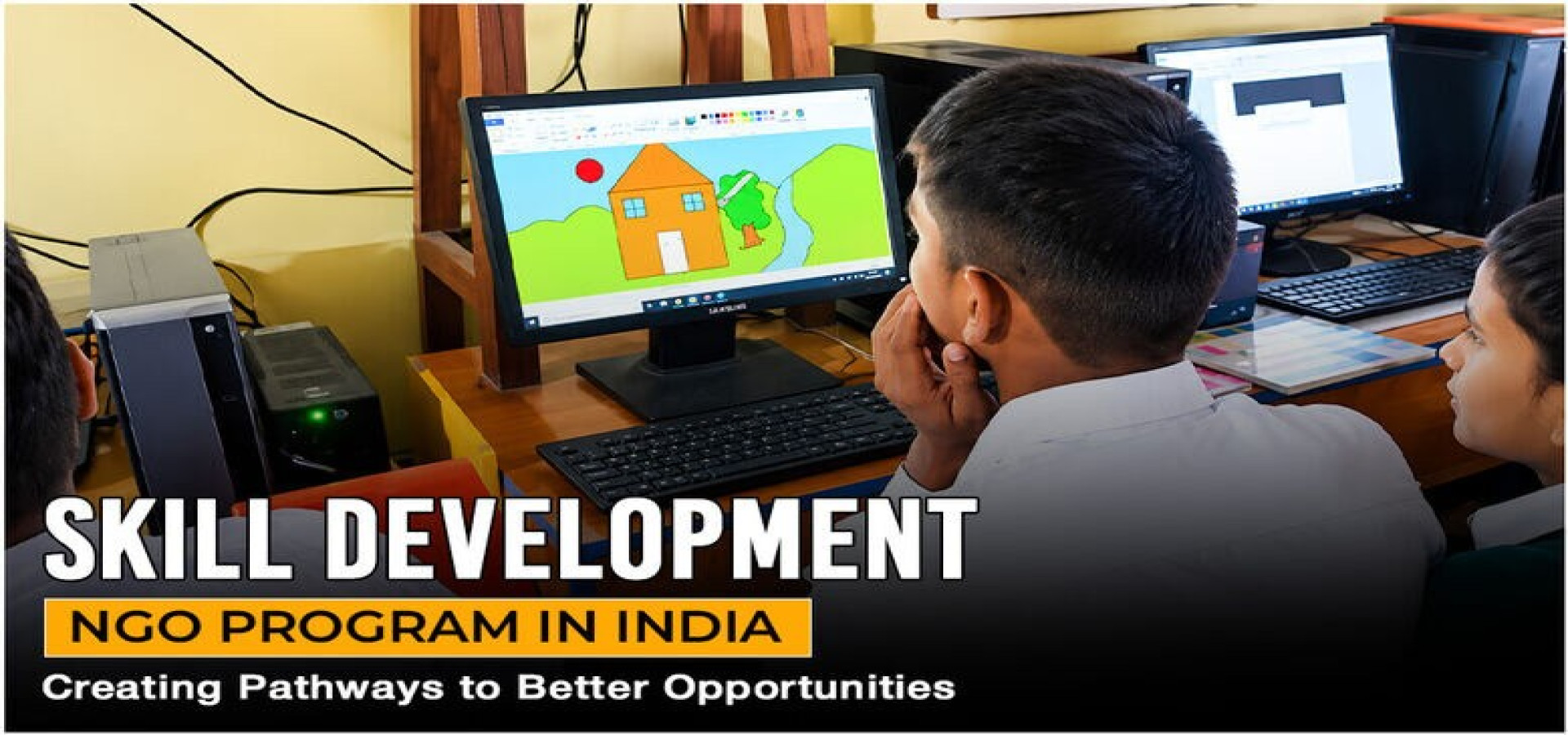
Many people want to know, "What is a skill development NGO program in India? Let me help you understand that it is an initiative by Sshrishti Trust, Skill development NGO in Delhi that provides employment-oriented skills and practical training to underprivileged people. So, women and children coming from poor backgrounds can gain practical knowledge to achieve financial independence. These programs are especially designed for young people and women who have minimum access to education and practical training.
Sshrishti Trust is one of the organizations that successfully work in this area. Its skill development initiatives focus on up-skilling women and children who come from poor backgrounds. They aim to fulfil the opportunity gap among upper and lower communities, through education, digital and soft skills, career guidance, and employability training. Their main programs are computer training, software skills, tailoring, spoken English courses, and financial education.
The vision behind this skill development program is simple: offering accessibility to relevant knowledge and practical training. So vulnerable communities can feel prepared and more confident to pursue employment and even can start their own small businesses.
Education creates a strong base for growth, on the other hand practical learning helps in applying actual knowledge in regular life and professional situations. For young people living in communities with fewer resources and career guidance, skill development can make a meaningful impact.
It can also support women to become financially independent. Learning skills such as digital literacy, financial management, stitching, or communications skills can open possibilities for good self-employment.
Sshrishti Trust's approach connects skill development with broader community growth. Its stated mission focuses on youth skilling, child education, and women's empowerment, with the wider goal of creating an honorable society through holistic community development.
A skill development NGO program in India can include different types of training depending on the needs of the community. Whether it is education, women empowerment, youth building etc. Some of the primary program are:
Digital knowledge has become extremely important for employment, and everyday communication. Sshrishti's programs involve computer literacy and digital skills. Its skill development training programs range from basic computer knowledge to advanced computer knowledge including different programming and coding.
The organization's 2025 Annual Report clearly demonstrates how this approach is being applied in practice by the team. Through its Community Resource Network in Uttarakhand, Sshrishti has provided digital literacy programs to several students in approximately 18 government schools across Nainital and Almora regions. The program also provided youth skilling through establishing centers in Letibunga, Bhowali, and Someshwar.
The training provided at Sshrishti's skilling centers mostly emphasize on practical skills that help learners to prepare for real life challenges. According to their 2025 Annual Report, the centers successfully offered training to individuals in Data Science with Python, Tally and Accountancy, graphic design and video editing, along with BPO skills.
They also have been providing career counselling and placement support to help learners better understand their career options in the world. This combination of practical training and career support, help students to gain useful skills and also prepare them for the industry workplaces with greater confidence.
Financial literacy is another important part of skill development. Where individuals understand different money management skills including budgeting, saving, spending to make informed financial decisions. Sshrishti specifically remarks on financial education as a way to support financial stability and women's financial independence.
A successful skill development NGO program in India requires more than just a classroom and a trainer. The training needs to focus on real problem solutions in order to uplift the underprivileged communities and teach them practical skills so that they can use them in their daily lives and can improve their living. Some important requirements include:
1. Relevant Training - Courses must be designed according to learners' interests and potential employment opportunities. Training in computers, accounting, design, communication, or other practical areas can offer participants to develop useful skills.
2. Qualified Trainers - Understanding Supportive and knowledgeable trainers are also required in order to provide learners with guidance and a better environment so that they can understand several concepts.
3. Practical Learning - It is observed that people learn more effectively when they can practice what they have been learning. Computer laboratories, workshops, projects, and practical assignments can make training more reliable and meaningful.
4. Career Guidance - Training becomes more useful when participants actually know how and where they need to apply their skills. Here, career counselling, interview preparation, and placement support play an important role that help learners take their next step.
5. Accessible Learning Opportunities - Programs should reach communities where training opportunities are limited and people have minimum access to them. Sshrishti's foundation usually endeavors to work remotely to reach out to impoverished areas. It demonstrates the importance of taking digital and skill-based learning closer to vulnerable communities.
Following are the few major points of Sshrishti Trust skill development program that have created real impact according to the annual report. The 2025 Annual Report shows useful numbers and real data about the impact of Sshrishti's Community Resource Network program during 2024–25.
A total number of 3,785 students were positively impacted by the program, including 3,187 government school students. The report also records 88 students placed in appropriate jobs.
The report provides deep insights of learning outcomes. Digital literacy improved from 35% to 85% at the end of training, while STEM remedial learning also reached from 45% to 80% over a year, according to the report.
The three main skilling centers recorded 598 beneficiaries in total: 200 at Letibunga, 200 at Bhowali, and 198 at Someshwar when the computer and remedial center figures listed in the report are assembled. The final report's detailed table records 598 beneficiaries overall, including 282 males and 316 females. Showing amazing progress.
These figures apparently demonstrate how skill development can combine education, employability, and practical learning rather than being limited to instructions and classroom.
Following are the some benefits of skill development programs showing that a well-designed initiative can create several positive outcomes for enrolling participants.
Better Employment Opportunities - Practical skills make individuals more prepared for getting entry-level employment. Career counselling and placement drives can further support this transformation.
Greater Confidence - Learning a new skill can help individuals become more confident about their abilities and personality. This confidence can be beneficial during interview sessions and workplace interactions.
Support for Women’s Financial Independence - Skills related to employment, digital literacy, financial management, and entrepreneurship can assist women make more informed decisions and explore different ways to earn independently.
Improved Digital Inclusion - Digital skills can help reduce the gap between upper and lower communities with easy access to technology and better opportunities exposure. Sshrishti's work specifically focuses on this area in order to improve digital access in underserved communities.
Opportunities for Rural Youth - For young people in living rural and mountainous areas, access to skill centers can bring learning opportunities closer to home. Therefore, Sshrishti's Community Resource Network operates in Uttarakhand and has worked with government schools and youth through digital learning initiatives to uplift the lives of the impoverished people.
Skill development programs offer underprivileged people technical knowledge. They also provide confidence, practical experience, and a sense of possibility. When training is designed around real community needs and supported by career guidance and practical learning, it can help people move towards sustainable livelihood opportunities.
Sshrishti Trust's 2024–25 Annual Report demonstrates this approach through its Community Resource Network, which impacted around 3,785 students, including 3,187 government school students, and recorded 88 suitable job placements.
The journey towards employment to achieving financial independence may not happen overnight. However, gaining the right skills can be a meaningful initial step toward a better future. With continued efforts of Sshrishti Trust, Skill development NGO in Delhi, communities, donors, volunteers, and responsible partners, skill development programs positively impact on children and women’ lives and help them build a brighter future.